
Pure Sine Wave Inverter
Pure Sine Wave Inverter
-
50%

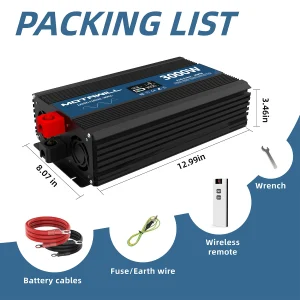
DC To AC 12V 3000W Pure Sine Wave Inverter For RV
Rated 5.00 out of 5$399.99Original price was: $399.99.$199.99Current price is: $199.99. Add to cart -
33%

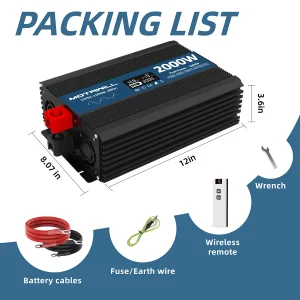
2000 Watt Pure Sine Wave Inverter For RV | 12V DC To AC power inverters
Rated 5.00 out of 5$269.99Original price was: $269.99.$179.99Current price is: $179.99. Add to cart -
36%

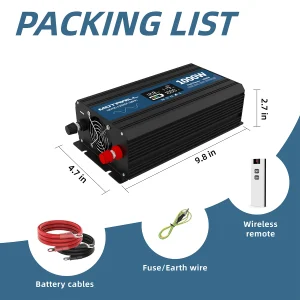
12V DC to 110V AC Car Power Inverters | 1000 Watt Pure Sine Wave Inverter
Rated 5.00 out of 5$139.99Original price was: $139.99.$89.99Current price is: $89.99. Add to cart -

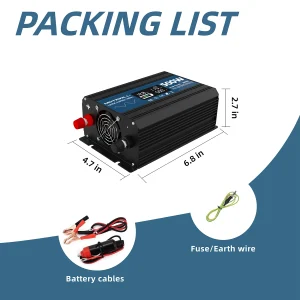
12V DC to 110V AC Car Power Inverters | 500W Pure Sine Wave Inverter
$59.99 Add to cartRated 5.00 out of 5
MOTRWILL Best Pure Sine Wave Inverter Store
Welcome to the inverter store, featuring a wide selection of pure sine wave inverter, there are 500W pure sine wave inverter, 1000W pure sine wave inverter, 2000W pure sine wave inverter, 3000W pure sine wave inverter. Pure sine wave inverter offers many distinct advantages over modified sine wave inverter. This type of inverter produces a uniform, smooth waveform, rather than the clumpy or chunky waveforms produced by modified sine wave inverter, resulting in a cleaner, smoother, and more efficient overall experience. pure sine wave inverter is safer and must be used with sensitive electronic equipment; otherwise, the equipment may not operate as intended by the manufacturer. Some applications that require pure sine wave inverter include microwave ovens, key fobs, medical equipment, laser printers, digital clocks, and other sensitive electronic devices. compared to non-pure sine wave inverter (such as modified sine wave inverter, or MSW), PSW inverter also runs cooler and is easier to start.
What is a pure sine wave inverter?
A pure sine wave inverter is a device that converts battery power into a 220 VAC or 120 VAC sine wave output.
There are three basic types of inverter: square wave inverter, modified sine wave inverter, and pure sine wave inverter.
Square wave inverter produces a square wave output voltage waveform. The main disadvantage of square wave inverter is that it cannot be used to operate electronic devices or delicate appliances.
Advanced inverter produces an optimized voltage waveform that is closer to a sine wave, but not a pure sine wave. This type can be used to operate certain appliances or electronic devices, but not all.
Pure sine wave inverter produces a pure sine wave voltage with characteristics that are almost identical to the AC mains waveform. Therefore, this inverter can operate nearly all appliances without any problems.
How a Pure Sine Wave Inverter Works
A pure sine wave inverter operates by generating a sinusoidal alternating waveform at a selected frequency on the primary winding of a transformer. This frequency can be 50 Hz or 60 Hz, depending on national and regional specifications.
This sine wave is a form of sinusoidal PWM—a digital signal—because the power transistors used in the inverter cannot operate efficiently with linear input.
Using a linear signal would cause the transistors to heat up and become inefficient. This is why digital PWM is used: it ensures efficient operation and minimizes heat generation.
This sine wave is generated using SPWM, or sinusoidal PWM. Conventional PWM refers to a pulse-width-modulated signal, where the pulse width is adjusted at a fixed frequency. However, in sinusoidal PWM, the pulse width varies, resulting in an average voltage pattern at the transformer output that resembles a linearly varying sinusoidal waveform.
The transformer, a device that acts like an inductor, effectively converts the digital SPWM oscillation into a smoothly varying pure sine waveform at its output.
Essentially, the SPWM waveform is generated using an operational amplifier IC or a 555 IC, which drives the inverter MOSFET to oscillate in the SPWM pattern. The MOSFET then generates the same SPWM waveform on the transformer’s primary winding, producing pure sine wave AC power at the transformer’s secondary output.
Are pure sine wave inverter more efficient?
The output waveform of a pure sine wave inverter is highly consistent with the mains power supply, with harmonic distortion kept below 3%. Its exceptional stability and compatibility make it the preferred solution for mid- to high-end applications. For sensitive equipment, it provides a stable power supply for medical monitors, precision instruments, game consoles, and other devices, effectively preventing data errors or hardware damage caused by electromagnetic interference. Field measurements show that the failure rate of laptop power adapters increases fourfold when using square wave power, while pure sine wave power reduces the risk of abnormal shutdowns by over 80%.
For inductive loads containing motors, such as air conditioners and washing machines, pure sine wave inverter can reduce the peak starting current by 30%–50%, significantly lowering mechanical wear and energy consumption. For example, a certain brand of inverter driving a refrigerator compressor showed a 12% improvement in energy efficiency, saving approximately 150 kWh of electricity annually. In specialized fields such as RV camping, solar energy storage systems, and industrial automation, its high conversion efficiency of up to 95% and low heat generation ensure uninterrupted, stable operation 24/7.
Application Scenarios of Pure Sine Wave Inverter
Industrial Sector
At construction sites or remote industrial locations without a mains power supply, pure sine wave inverter can convert DC power from batteries or other sources into 220V/120V AC power, providing electricity for various power tools, measuring instruments, and other equipment, ensuring smooth production operations.
Home Applications
During a power outage, it can connect to a home battery to power appliances such as televisions, refrigerators, induction cooktops, and electric fans, ensuring basic household electricity needs. Pure sine wave inverter is particularly effective for precision electronic devices requiring high power quality, such as computers and audio systems, providing stable AC power and preventing damage caused by power issues.
In-Vehicle Use
While driving, a pure sine wave inverter can convert the car battery’s 12V DC power into 220V/120V AC power, allowing drivers to use in-vehicle appliances like laptops, phone chargers, and small microwave ovens to meet various power needs on the road.
What size pure sine wave inverter do I need?
Power Requirements: Determine the maximum power you need from the inverter. Based on the total power of the devices or loads you want to connect, select an inverter with a power rating that meets these requirements.
Voltage Type: Determine the input and output voltages the inverter can handle. Voltage standards vary between countries and regions, so ensure the inverter you choose is compatible with your power grid or battery system.
Efficiency and Load Capacity: An inverter’s efficiency refers to the amount of energy lost when converting DC power to AC power. Choosing a high-efficiency inverter reduces energy waste. Additionally, consider the inverter’s load capacity to ensure it can operate stably and meet your needs.
Reliability and Warranty: Understand the inverter’s reliability and warranty policy. Choosing a reputable brand and reliable supplier can extend the inverter’s lifespan and provide adequate warranty support.
Other Features: Select other features as needed, such as protection functions (overload protection, overheating protection, etc.), battery management functions (if you plan to connect the inverter to a solar cell or other battery system), and a user interface.
Precautions for Using a Pure Sine Wave Inverter
DC Voltage Must Be Consistent
Each inverter has a DC input voltage rating, such as 12V or 24V. The battery voltage must match the inverter’s DC input voltage. For example, a 12V inverter must use a 12V lithium battery.
The inverter’s output power must be greater than the appliance’s power draw.
This is especially important for appliances with high startup power draw, such as refrigerators and air conditioners, where a larger margin is required.
Ensure correct positive and negative connections.
The DC voltage connected to the inverter is marked with positive and negative polarity. Red is positive (+) and black is negative (−). The battery is also marked with positive and negative polarity. When connecting, connect positive to positive (red to red) and negative to negative (black to black). The connecting wires must be thick enough and their length minimized.
Store in a well-ventilated, dry place.
Protect from rain and keep at least 20 cm away from surrounding objects. Keep away from flammable and explosive materials. Do not place or cover the device with other objects. The operating temperature should not exceed 40°C.
Charging and inverter operation cannot be performed simultaneously.
That is, the charging plug should not be connected to the inverter’s output circuit while inverter operation is in progress.
What is pure sine wave inverter for RV? Do I need it?
The pure sine wave inverter for RV will convert the DC output from the battery to alternating current (AC), which is the standard used by all commercial appliances. While inverters can power appliances in moving vehicles such as RVs, trucks, RVs, or boats, there are also power inverters that keep home appliances running during a power outage. If your home needs emergency backup power due to a power outage due to a storm, hurricane, or severe winter weather, a power inverter can keep your essential appliances running.
What are the advantages of MOTAWILLpure sine wave inverter for rv?
The pure sine wave inverter for RV produces smooth, quiet, reliable power to run appliances and electronics without any disruption. As the name suggests, the pure sine wave inverter for RV generates pure sine wave shaped current and also provides overload protection for both DC input and AC output to prevent damage to components and equipment.
What do I need a pure sine wave inverter for rv to run?
As mentioned above, you will need a pure sine wave inverter for RV to run appliances with AC motors such as microwaves and refrigerators; medical equipment such as CPAP machines with humidifiers, sensitive electronic equipment, laser printers, newer TVs, and appliances with electronics Electrical appliances with timer or digital clock.
Can MOTAWILL pure sine wave inverter for rv run 24 hours a day?
This may be because the pure sine wave inverter for RV generates some heat when running. However, MOTAWILL pure sine wave inverter for RV is usually equipped with a fan or radiator to ensure effective cooling. In addition, the inverter also has an overload protection function. If the rated power is exceeded, the inverter will automatically shut down to prevent overheating.
Another factor to consider is the load on the pure sine wave inverter for RV. Load refers to the total power demand of the equipment connected to the battery inverter. If the load on a pure sine wave inverter for RV exceeds its power rating, the inverter may overheat or not function properly. Therefore, it is important to choose an inverter with a power rating sufficient to meet your needs.
To sum up, MOTAWILL pure sine wave inverter for rv can operate 24 hours a day. Modern battery inverters feature efficient cooling systems and overload protection to ensure stable performance during continuous use. However, be sure to choose an inverter that suits your requirements and pay attention to the load on the inverter to avoid overheating or other problems.
Will the pure sine wave inverter for RV drain the battery when not in use?
If you turn on the pure sine wave inverter for RV with no load connected, the deep cycle 12v lithium battery will draw an average of 1 amp per hour; 24 amps per day; or 168 amps per week. The simplest solution is to turn off the inverter when not needed and the battery consumption will go to zero.
Is it worth buying the MOTAWILL pure sine wave inverter for RV?
When you need high-quality, stable power for sensitive electronics or appliances, you need the MOTAWILL pure sine wave inverter for RV. This is necessary in situations where a clean and reliable power supply is critical to prevent any potential damage or failure caused by irregular power waveforms.


